getting to know geva mentor
Netball legend Geva Mentor on her netball playing journey, the hardest GS to play against and top tips for young defenders.
Article quick links:
- Geva’s netball journey
- Confidence as a netball player
- Dealing with setbacks
- Life as a professional netballer
- Hardest GS to play against
- Top tips and skills for young defenders
Let’s delve into Geva’s netball journey
How did you first get into playing netball?
At school I played basketball with the boys as we didn’t have a girls team. After a few matches in the local league other schools put in a complaint and I wasn’t allowed to play anymore so I wanted to find a new sport.
Some of my friends played for the school netball team and I thought it looked fun plus you got to miss the last lesson of school as we had to travel quite far for fixtures! Things started to take off when I got to secondary school.
When I was 13, I was scouted at a local county tournament. A few people came up to my mum and said I should explore my potential. At this point we decided to explore options and attended an open day for the high performance programme at Bath University.
It was the first programme of its kind at the time and we met with kiwi Lyn Gunson who lead the programme. My time in that environment was incredible, building good foundations and surrounding myself with the right people to advance.
I’m forever grateful for my mum’s commitment to the training too. She used to drive the four-hour round trip from Bournemouth to Bath two to three times a week for training.
I made the England U17 squad at the age of 14 and it was at this tournament that Julie Hoovrweg, the England Roses coach at the time, scouted me to attend senior trials.

This led on to me supporting the opens at a training camp in Cardiff and playing FENA U17 in Manchester. At 15, I was called into the senior England team and patiently waited for my chance to pull on the red dress which came on 11th July 2001 against the New Zealand Ferns in Palmerston North. I was 16 years and 297 days old making me the youngest-ever player to represent England at the time.
What advice do you have for developing confidence at a netball player?
Confidence isn’t about looking around and convincing yourself you are as good as everyone else. It’s about looking within and recognising what you already have.
You don’t need to have all the answers, be the best in the room or eliminate every bit of self-doubt. Trust what you know, recognise your strengths and focus your energy on what you can control.
Do you have any advice for young athletes after setbacks?
It’s OK to feel the emotions, whether it’s sadness through an injury, disappointment in selection or frustration in personal performance. Give yourself time to process the setback, before parking it and making your next forward move.
I was fortunate to not have many injury setbacks during my playing career but have had team mates who have. And there lays another aspect, to be supportive, to be real and to keep bringing the fun.
Returning to the court after injury?
Read Nat Panagarry’s top tips to get back on the court
the best thing about becoming a professional netballer?
The amazing friendships you make and the interesting people you come across have to be at the top of my list.
A close second is the opportunity to travel and absorb different cultures and experiences.
Making a living from the game I loved playing was special. Everything you do, eat and work for is preparing you to be the best version of yourself.
Who was the hardest shooter to play against?
New Zealand’s Goal Shooter Cat Tuivaiti! She was tall, accurate, strong, and had the quickest hands in the game coupled with lots of sneaky tricks and passes.
Check out some of Cat’s tricks in the video below:
And who did you love playing with?
I had a really special partnership with Sonia Mkoloma and to this day we’re best friends but I loved playing with pretty much every defensive four I took to the court with.There are too many names to mention and for me it wasn’t just the in circle partnership that was important, but C and WD too.
Ash Brazill was an incredible WD who I enjoyed playing with in the Suncorp Super Netball league (SSN) in Australia. She was a master at shutting down the circle egde and we always used to joke that her hard work out the front made me look good!
I felt lucky enough to play with some incredible talent and other names that spring to mind are Mo’onia Gerrard, Karla Pretorious and Jodi-Ann Ward.

Lets talk netball skills
Give us 2 top tips for defending a holding GS
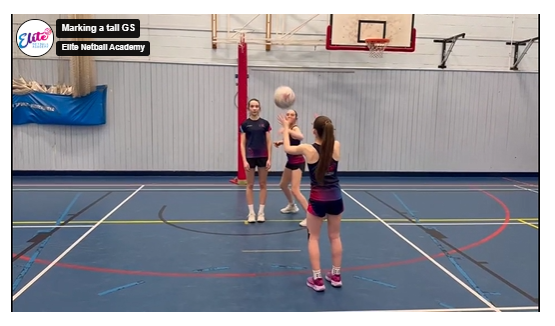
Playing a holding shooter can be frustrating but I always loved the challenge. Physically you must get off the body to confuse the space and mentally, be courageous, have a crack, tempt passes and keep persisting – it will pay off in the end!
Exclusive to our Members Area: Marking a tall and holding GS – join to view this video and 100s of other resources now
Talk us through the ‘Geva roll’”’
You’re on the front of your shooter, too tight to get up in the air and compete, the midcourt have been flying down the court and launching the balls in. The ball has gone over your head many times, the shooter has a great hold (and maybe the umpire doesn’t see the occasional elbow in the back!).
So when the feeder has the ball, do a little twitch left or right, then place your back foot around the shooter, rolling your body away and back into theirs to trap them from behind or get up to catch the pass that was for them and now lands nicely in your path.
Timing is key as rolling means you have to turn away for the ball, losing sight of it for a moment. The roll can expose you if timing is out but with confidence, conviction practice (and a bit of luck) you can perfect the move!
What defensive skills do you think are most important for young defenders to learn early on?
Voice! Surprisingly it can be the key to a lot, partnerships, keeping you engaged, netball IQ and it’s often a standout point coaches notice. So always think about constructive directions and chatter.
Footwork is also such an important skill for defender. Having efficient, light and fast footwork is a great starting point and can aid many defensive skills, such as marking an opponent, dictating space and hunting ball.
Reading the game and opening your vision is also up there as a skill for young defenders.
Are there any “must-do” practices defenders should do?
Reaction drills are always fun and useful. The simple ones were always the best, such as:
- Catching a tennis ball, two hands then one hand
- Have the tennis ball dropped from chest height and catching it before it hits the ground
- You can do both of these practices with a netball as well.
And finally 3 pieces of advice for young players
- Stay humble
- Absorb as much as possible
- Don’t fear failure
About the author:

Geva Mentor is an ambassador for Elite Netball academy. During her playing career, she achieved 175 international caps for the England Roses. Career highlights include winning Commonwealth Gold at the 2018 Games, Silver at the 2023 World Cup and Bronze at three World Cups: 2011, 2015, 2019.
In her domestic career, Geva amassed 350 elite league games representing teams in the NSL, SSN and ANZ and won four league titles in Australia including a back to back victory as captain at Sunshine Coast Lightning. In 2014 and 2017 she was voted the ‘World’s Best Netballer.
You might also like:
- 3 Netball Shooting Drills
 Want to improve your shooting technique and accuracy under pressure? Check out these 3 netball shooting drills from International netballer Berri Neil.
- 5 main rules of netballTime to delve into the 5 main rules of netball to show how it differs from its sports sister, basketball.
- A Day In The Life Of A Professional Netball PlayerA day in the life of a professional netball player