

Returning to the netball court after injury
Netball is a high-impact sport and, as with any sport, unfortunately, this means injuries can occur.
Lower limb injuries are the most common type of injury in netball, with some players being sidelined for long periods before being cleared for a return to court.
We asked Superleague and former international player Nat Panagarry for her top tips for rehab, staying engaged with the sport and your team during an injury layoff.
Quick Links:
- Core exercises for netballers
- Arm exercises for netballers
- Cardiovascular workouts for injured netballers
- Advice for injured players
- Staying connected to teammates
- Injured player management – advice for coaches
- Top players who have returned to the court following injury
Netball players – recovering from injury
Understandably, you’ll want to get back on the court as quickly as possible. Your commitment to rehab crucial for a successful outcome.
- Follow the Program: Do not rush the rehab process or sneak in extra, high-intensity workouts not approved by your physio, as this significantly increases re-injury risk. Getting back on the court after a sports injury involves a structured rehab plan, moving through stages from rest to strength, mobility, and finally sport-specific movements, all while managing the mental challenges like fear of re-injury, ensuring you build confidence through visualization and trust in your body, and working with professionals to tailor exercises and prevent setbacks for a safe return to play.
- Prioritise Overall Health: Ensure proper nutrition (especially protein intake), hydration and adequate sleep to support the body’s healing process.
- Communicate: Maintain open communication with your physiotherapist about your progress, pain levels and any concerns, including the mental health aspects of injury recovery – such as the fear of re-injury.
- Stay Active Appropriately: Your physio will provide appropriate exercises to maintain general fitness without compromising the healing of the injury.
What exercises can you do while off the court to keep in condition?
This can be the most frustrating part about being injured. Worrying about your fitness and wanting to move your body. You must listen to professional advice and give your body the correct rest it needs to heal.
When your mind and body are ready, if you have a lower-body injury that prevents you from weight-bearing on your feet, you can perform exercises seated or lying down to strengthen your core and arms.
As frustrating as it is being away from the court, use this time to take up new hobbies, spend time with family and friends. Having a focus away from the court will help in your overall recovery.
Before I share examples of core and upper body exercises for netballers, please always consult with a doctor or physical therapist before starting a new exercise to ensure the activities are safe for your specific injury.

Core exercises for netballers:
Core workouts can often be performed without involving your lower body, especially while lying down or seated.
- Crunches. Lie flat on the floor with your legs bent (if possible, if not keep straight) or with your calves and feet resting on a chair/bench. Place your hands behind your head and engage your abs to lift your shoulders off the ground.
- Seated Torso Twists. Sit upright on a chair with feet flat. Cross your arms and gently twist your upper body to the left, hold, then return to the centre and repeat on the right.
- Dead Bugs. Lie on your back with knees bent at 90 degrees and arms extended toward the ceiling. Lower one arm toward the floor overhead while simultaneously straightening the opposite leg toward the ground. Keep your lower back pressed into the floor. Return to the start and switch sides.
- Russian Twists. Sit on the ground with your legs extended (or slightly lifted if your injury allows and you can balance). Lean back slightly and twist your torso from side to side, touching the floor on each side if possible.
- Plank Variations (if safe). If you can bear weight on your knees, you can perform modified push-ups and planks from your knees instead of your toes. Avoid traditional planks if they put pressure on your injured foot or if your doctor advises against it.
Arm exercises for netballers:
You can maintain arm strength using free weights, resistance bands, or machines while seated or lying down.
- Seated Bicep Curls. Sit in a chair with feet flat and hold a dumbbell in each hand. Curl the weights up toward your shoulders, then slowly lower them back down.
- Seated Overhead Press. With dumbbells at shoulder height, slowly press them upward until your arms are straight. Lower them back to shoulder height.
- Seated Triceps Extensions. Hold a single dumbbell with both hands above your head. Slowly lower the weight behind your head by bending your elbows, then extend your arms to press it back up.
- Lateral Raises and Front Raises. Sit and lift light dumbbells out to the sides (lateral) or to the front (front) to shoulder height, then lower with control.
- Seated Rows. Loop a resistance band around your feet or a stable object and pull the band towards your chest, squeezing your shoulder blades together.
Cardiovascular workouts for injured netballers
The following exercises assume a low limb injury. Please consult a professional before trying these if you have any concerns and do not attempt if you have an upper body injury.
- Swimming/Water Aerobics. The water’s buoyancy reduces impact on your injury while providing resistance for a full-body workout. Use a flotation device between your thighs if needed.
- Upper-Body Ergometer (Arm Bike). This machine is essentially a stationary bike you pedal with your arms, offering an effective aerobic exercise without leg involvement.
Key considerations for sidelined players
- Listen to Your Body: Don’t rush: listen to your physical therapist if you have one, and avoid sneaking in extra intense workouts that could cause relapse.
- Stay Active (Smartly): Movement is vital, but stick to PT-approved activities, not your usual intense training.
- Mental Game: Address anxiety about re-injury with visualisation, mindfulness, and positive self-talk. Building mental resilience is as important as physical recovery.
- Professional Guidance: Work closely with your PT or sports medicine team for a customised plan that respects your specific injury (like ACL, Achilles, etc) and recovery timeline.
- Prevention: Incorporate balance and strengthening exercises into your routine to reduce future injury risk
How can you stay connected to your teammates when you’re injured?
Even if you’re injured, you can still attend training sessions and games if you can. I know how difficult it can be to sit and watch training or games when you desperately want to be back on the court. However, the more you’re around the team, the more connected you will feel when you’re back playing.
If your injury is a long-term injury and it’s likely you will be off the court for 3 months plus, some initial time away from the court is probably a good idea to give yourself time to process the injury. It can take time to decompress and once you have, you can start attending training and contributing to the team in a positive way.
Ways you can stay involved with your netball team when injured
- Help with team tasks (like equipment or pre-game playlists)
- Assist with Logistics: Help set up equipment, DJ warm-up music, or manage water bottles and balls
- Analyse games. Still stay involved with clips or video analysis. Keep stats (like centre pass to goal %) to stay mentally engaged with the tactics
- Support Coaching: Ask to help coach beginners or lower-level teams if you’re a more advanced player
- Maintain open communication with teammates and coaches about your recovery and availability, ensuring you’re still a vital and connected part of the team.
How mindset is everything
By doing these things, you maintain your sense of belonging and purpose, which is crucial for both your recovery and your connection to the team.
- Stay Positive: A positive attitude boosts team morale and keeps you motivated,
- Maintain Social Ties: Talk with teammates during breaks to keep friendships strong.
- Set Goals: Work with your coach on rehabilitation goals to stay focused.
- Keep Coaches Informed: Regularly update your coach on your recovery progress and what you can help with.
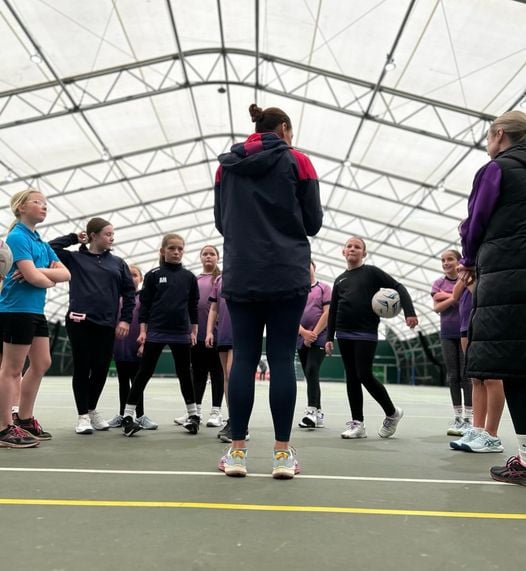
How can Netball coaches support an injured player?
Here is a support and recovery checklist for coaches:
- Emotional Support: Acknowledge feelings, listen without judgment, and remind the player they’re a valued team member.
- Communication: Maintain regular check-ins with the player and parents.
- Stay Involved: Encourage them to come to training to shadow, help with drills (if safe) to stay connected.
- Education: Explain the injury/recovery process to reduce anxiety.
- Set Goals: Help them establish short-term rehab goals for motivation.
- Involve Professionals: Work with physios/doctors on return-to-play plans.
- Team Mentality: Reassure the team and build confidence in other players.
- Watch for Red Flags: Recognise signs of mental health struggles and suggest professional support if needed.
- Connect them with a player who has been through something similar
The mental side of an injury
Sports psychology can help injured players by managing:
- Negative emotions (fear, frustration, depression)
- Rebuilding confidence
- Maintaining motivation
- Setting realistic goals
- Improving commitment to rehab through techniques like visualisation and positive self-talk. This can ultimately help speed up recovery and prevent re-injury by strengthening mental resilience.
We run regular workshops for academy players with Empowering Excellence – find out more here.
Players who have returned to the netball court after ACL injuries:
- Paige Hadley (Australia): A key player for the NSW Swifts and Australian Diamonds, Hadley had a knee reconstruction in 2014 and successfully returned to elite netball, later being named in the national squad.
- Maddy Proud (Australia): Another NSW Swifts player, Proud sustained a season-ending ACL injury in 2019. She has since made a full recovery and returned to captain the team and earn a spot in the Diamonds squad.
- Beth Durant (née Cobden, England): The England international has faced the immense challenge of tearing her ACL three times throughout her career. Despite the mental and physical toll, she has returned to play at the top level each time.
Players who have returned to the netball court after ankle injuries:
- Layla Guscoth: The England international defender suffered a ruptured Achilles tendon during the 2019 Netball World Cup in Liverpool. Medically trained herself, Guscoth knew the severity of the injury immediately. After extensive rehabilitation, which included working as a doctor during the pandemic, she successfully returned to the court with the Adelaide Thunderbirds and the England national team, showcasing an inspiring comeback to top-level netball.
- Claire O’Brien: A player for the NSW Swifts, O’Brien ruptured her Achilles tendon and used an Ankle Support as part of her treatment and recovery.
A final reminder that no injury is the same. Don’t compare yourself to others. Your body will heal in the time it needs. You are not alone during this process; use the people around you. Family, coaches, teammates, friends and your recovery professionals.
Coming back from an injury is never easy physically and mentally but you will learn a lot about yourself and don’t forget to still have fun along the way.
About the Author: Nat Panagarry

Nat is a former international and Superleague midcourrt player and our Performance Coach Consultant.